
The Kinghill Pavilion
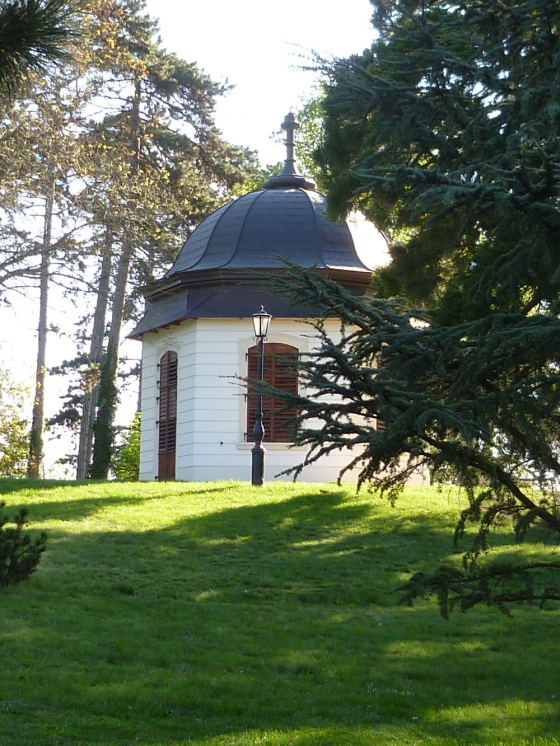
The only remaining Baroque building in the castle park is the Királydomb Pavilion with the portraits of the conquering leaders and kings of Hungary. About 200 metres from the main building of the castle, on the north-western side of the garden, on the top of a small hill, stands a Baroque pavilion. The Royal Cathedral Pavilion was built in the two decades following Maria Theresa’s visit to Gödöllő in 1751, before the Count’s death in 1771. Antal Grassalkovich most probably attended the coronation of Maria Theresa in Bratislava in 1740. Thus, he witnessed the Queen, in her coronation dress, ascending to the royal mound to perform the traditional sword cuts as part of the coronation ceremony, a symbolic gesture of her willingness to defend the country from the enemy, wherever he might attack. By placing the royal pavilion and decorating its interior, Grassalkovich glorified his monarch, the nobility and himself, as he proclaimed the interdependence of the monarch and the Hungarian nobility, his own sacrifice and his unconditional loyalty to his monarch. The garden pavilion is a regular hexagonal building, built on an artificial hill, with an internal diameter of 6,5 metres and walls 3,2 metres high. The walls are pierced by four windows and two doors placed opposite each other, and the interior is decorated with portraits of Hungarian leaders and kings from the Hungarian occupation. In the 1810s, when the garden was converted into an English park by Leopoldina Esterházy, wife of Prince Antal III Grassalkovich, only the Royal Pavilion was left intact, and the unknown redesigner of the park incorporated it into the landscape garden structure, and it still defines its place and role today. After the Battle of Isaszeg on 6 April 1849, the retreating imperial army, enraged by the defeat, seized the pictures of the King’s Pavilion in Gödöllő with bayonets, seeing them as symbols of Hungarian statehood. In 1857, the then lord of the castle, the Greek-born Baron Sina Simon, hoping for a visit to Gödöllő by Franz Joseph, not only restored the castle but also saved the memory of the Hungarian noble tradition from destruction. He restored the pavilion building and replaced the damaged portraits. Ten years later, when the Hungarian government bought the castle and its surroundings after the coronation of the Emperor as King of Hungary and placed it at the disposal of the imperial couple as a coronation gift, the park became an important scene of court life, including the pavilion, an important orientation point of the landscape garden, which was also highlighted by the road network. The pavilion was damaged in the 20th century, perhaps during the First World War or the revolutions that followed, but it is possible that the royal portraits were removed when it was converted into a governor’s residence, and were kept in the Queen Elizabeth Memorial Museum in the Royal Palace in Buda between the two world wars. After the Second World War, 14 royal portraits were transferred from here to the Historical Picture Gallery of the Hungarian National Museum, but by that time their Gödöllő origin had been forgotten; later, art historian Dr. Ferenc Dávid managed to identify them. The building itself was probably preserved because it was located on a fenced-off area expropriated by the military and was practically inaccessible even to those who wanted to see its bricks. The building was restored in 2002 according to the plans of Dr. Zsolt Máté and Zoltán Szabó. The destroyed parts were restored based on photographs taken in the 1890s. The images of the kings were recreated in 2004 by the photographers József Hapák and György Filakowszky and graphic artists Balázs Szendi, using the surviving paintings, the Pictorial Chronicle, the Book of Kings and other illustrations. Since then, the former landmark of the castle park has been reopened to the public. You can visit: Visible only at pre-announced times! For more information click here!
Basilica Minor Máriabesnyő
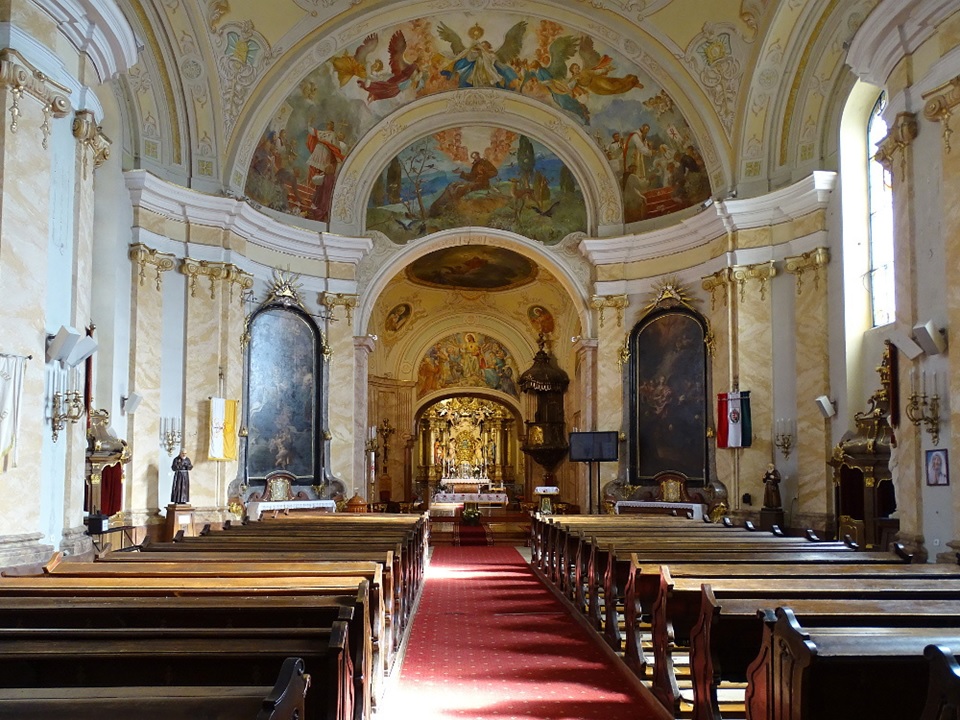
The famous Virgin Mary Shrine, Máriabesnyő’s unique element is in the Nagyboldogasszony Basilica, a two storied church with two statues on the alters. Here you can find the country’s smallest statue of the Virgin Mary, surrounded by wonders. The crypt is the resting place of the Grassalkovich family, which is Hungary’s most beautiful Baroque tomb monument. Nyitvatartás 2024. február 1-től március 15-ig technikai szünetet tartunk, mely alatt épülünk, szépülünk, hogy újult erővel nyissuk meg kapunkat és fogadjuk visszatérő és új vendégeinket a 2024-es szezonban. Jegyárak Irány a weboldal +36 28 576 510 +36 30 683 5341 lazarlovaspark@lazarlovaspark.hu Leírás Gyermekes családok számára, élmény kirándulásra, cégek részére csapatépítő vagy családi nap helyszínként, ifjú párok számára az „álom esküvő” megrendezésére nyújt csodálatos környezetet. Születésnapok, családi események otthonos megünneplésére is gyakran választanak minket. 2021-ben felújított Tornácos csárdánkban vagy tágas teraszainkon, minden szombat és vasárnap délben, korlátlan büféasztalos ebéddel várjuk vendégeinket a biztonsági szabályok teljeskörű betartásával. Bőséges, házias ízvilágú ételeink kóstolásán kívül, színes programokkal szórakoztatunk kicsiket és nagyokat. A magyar lovas hagyományokat felidéző lovassal, erdei kocsikázással, pónilovaglással, játszótérrel és népi játékokkal. Kis állatparkunkban, mint a “nagymama udvarán” megismerkedhetnek az őshonos háziállatokkal. Lazareum nevű múzeumunk látványos filmekkel és kiállítással mutatja be a kocsi, a magyar lovassport és a Lázár testvérek sportpályafutásának történetét. A fogathajtó világbajnokok 9 hektáros parkja és három különböző stílusú csárdája a céges csapatépítő programokon kívül felejthetetlen esküvők helyszíne is. Tovább olvasomBezárom Lázár Lovaspark 2182 Domonyvölgy, Fenyő utca 47. Facebook Instagram Youtube
Gödöllő Royal Waiting Hall
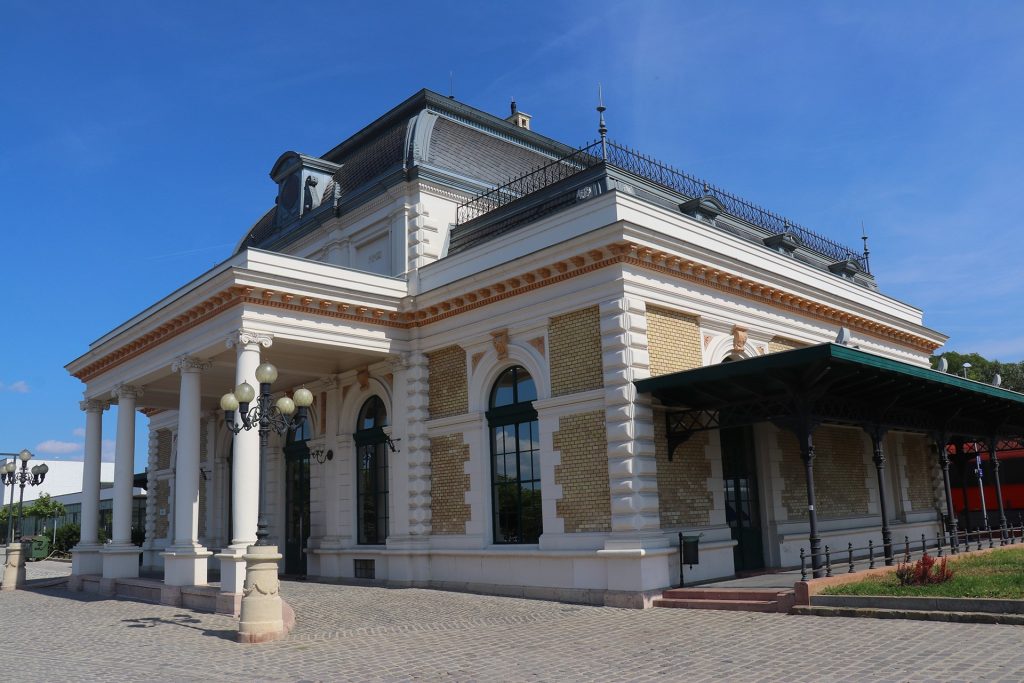
The Gödöllő Royal Waiting Hall: A historic gem in Hungary, where royal elegance and grandeur still linger. Nyitvatartás 2024. február 1-től március 15-ig technikai szünetet tartunk, mely alatt épülünk, szépülünk, hogy újult erővel nyissuk meg kapunkat és fogadjuk visszatérő és új vendégeinket a 2024-es szezonban. Jegyárak ……………………. Irány a weboldal Description The Royal Waiting Hall at the Gödöllő railway station Traffic started on the railway line connecting Budapest and Hatvan in the spring of 1867. The Hungarian state gifted Francis Joseph and queen Elizabeth with the castle and demesne of Gödöllő on the occasion of their coronation in the same year and from that time on, the royal couple and their retinue would regularly travel by train to Gödöllő. In order for the king to be able to travel by train from Vienna directly to Budapest, they connected two lines in the vicinity of Kőbánya station creating the royal track called like this even today. The single-story building of the railway station of Gödöllő was inaugurated on the 2nd of April 1867 and came to be rebuilt later several times. That the personalities of royal highness had to wait was a problem straight from the beginning. “The cabin used for waiting-room was small and dirty with stifling air.” Therefore, they built in 1868 a temporary wooden court pavilion in Tyrolean style. Train traffic started to grow from the eighteen seventies onwards. With the royal family frequently staying in Gödöllő, the settlement became a fashionable, trendy summer resort. Many people from Budapest came to spend the summer here, and they travelled mainly by train; moreover, they bought or rented houses near to the station, which resulted in a new summer resort district. It was common that a family was staying in its summer cottage of Gödöllő from summer till autumn, while the breadwinner husband commuted by train daily to his workplace in the capital. This situation made it imperative to expand the railway station building. In the year of 1874, they reconstructed it to be two-storey. Apart from the offices, they also put into shape waiting-rooms of first, second and third class, as well as a restaurant with ballroom. The stationmaster, two traffic managers, two cashier ladies, the keeper of the railway restaurant and the track-watchman dwelt in the station building. This building was now fit for attending on the common travellers’ needs. In 1882, it came to building up a new Royal Waiting-house in neo-Renaissance style. There are also Royal Waiting-rooms in Budapest Eastern and Western, but both of them are part of the station building, whereas in Gödöllő, they erected a separate building for this purpose. Otherwise, they put up a court tent occasionally for the king’s travels whenever the station building was inappropriate for a royal welcome. The Royal Waiting Hall was under the administration of the royal castle. Although it was single-story, it was, because of the big height of the inner spaces and of the roof construction, as high as the one-time two-storey station building which stood nearby. Entrances from the rail-track and from the town determine the axis of the building. On the town side, there is a portico, a projecting roof held by four Ionic pillars, where the court coach used to wait for the royal family members arriving by train. The floor of the building is on a level with the platform, so that stairs had to be used only when getting on. A platform roof held by cast iron pillars goes round on the rail-track side and on the two lengths along both sides from where two side-entries open each side. Upon the arrival of the royal couple, a red carpet would be rolled out between the entrance of the building and the train. The way led from the train to the spacious central room called the Princely Waiting-room furnished – according to Ferenc Ripka’s description – by easy-chairs and settees upholstered with wine-red silk. Queen Elizabeth’s room was on the right side and that of Francis Joseph was on the left side. They placed a writing-desk, a Venetian mirror and a set of sitting furniture upholstered in olive-green into the king’s room where the wall was covered with compressed silk carpet of the same colour. The queen’s furniture was the same with the same difference in its colour, which was pale yellow. The train covered the distance of 21.3 miles between Pest and Gödöllő in 49 minutes according to a court schedule preserved from 1875. The Royal Waiting Hall was used between the two wars by Governor Miklós Horthy. The German troops retreating in the end of World War II blew up the railway station building, which was completely destroyed. They also set on fire the coal stored in the cellar of the Royal Waiting Hall. As a consequence, the roof of the building burnt down; only the bare walls remained. They covered the Royal Waiting Hall with a flat roof in 1945. Thus, it became the station building meant for the issuing of tickets and for waiting, now open for the public. It has been declared historical monument in 1958. With the help of the Norwegian Fund, the Local Authority of Gödöllő Town renovated the Royal Waiting Hall in 2011 creating also a stand for museum exhibitions, a café and a centre of tourism. Read moreClose Royal Waiting Hall 2100 Gödöllő, Állomás tér 1-3 Facebook Instagram Youtube